

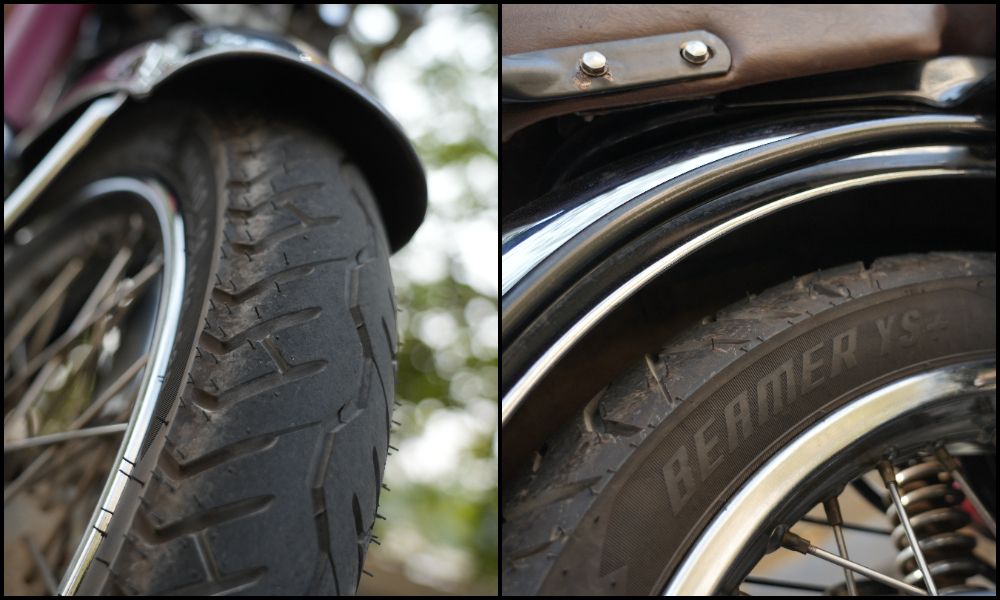
Your bike tyre works harder than any other component on your motorcycle. You rely on it for grip, stability, and safety every single ride. Yet many riders ignore their tyres until something goes catastrophically wrong. Regular inspection saves lives and money. Small signs often indicate big problems brewing beneath the surface. Understanding these warning signals helps you replace tyres before they fail dangerously.
Understanding Tread Wear Indicators
Every bike tyre features built-in tread wear indicators (TWI) – small raised bars positioned inside the grooves. These markers serve as your first line of defence against dangerous worn tyres.
How to Check Your Tread Wear Indicators
Look closely at your tyre grooves. You’ll spot tiny raised sections running perpendicular to the tread pattern. When your tread surface becomes level with these indicators, you’ve reached the legal wear limit. However, waiting until this point compromises safety, especially during wet conditions.
Try the coin test for quick assessment:
- Insert a rupee coin into the tread groove
- If you see most of the coin’s edge, replacement time approaches
- Check multiple spots around the tyre circumference
For scooter owners checking Activa tyre price options, remember that smaller tyres wear faster due to their reduced contact patch. The popular 90/100-10 size needs more frequent inspection than larger motorcycle tyres.
Why Tread Depth Matters
Tread grooves channel water away from your contact patch. Shallow treads can’t disperse water effectively, creating hydroplaning risks. Research shows that tyres with 2mm tread depth take 30% longer to stop on wet roads compared to new ones.
Key tread depth recommendations:
| Tyre Type | Minimum Safe Depth | Ideal Replacement Depth |
| Sport bikes | 1.6mm | 2.5mm |
| Commuters | 1.5mm | 2.0mm |
| Scooters | 1.0mm | 1.5mm |
Sidewall Damage Recognition [H2]
Your bike tyre sidewalls endure constant flexing, temperature changes, and environmental exposure. Regular inspection reveals problems before catastrophic failure occurs.
Common Sidewall Issues
Check for these warning signs:
- Surface cracks: Fine lines appearing like dried skin indicate rubber degradation
- Deep cuts: Any cut exposing cord material demands immediate replacement
- Discolouration: Brown or grey patches suggest chemical breakdown
- Scuff marks: Continuous riding with low pressure causes irreversible damage
For instance, when researching for replacements, factor in sidewall condition. Even budget-friendly options from reputable brands offer superior sidewall strength compared to worn originals.
Bulges and Bubbles Mean Danger
A bulge indicates internal structural failure. The tyre’s inner layers have separated, creating a weak spot that could burst without warning. No repair fixes internal separation – immediate replacement becomes mandatory.
Bulge danger zones:
- High-speed riding increases burst risk exponentially
- Load carrying stresses the weakened area
- Temperature changes worsen the separation
Air Retention and Puncture Problems
Modern tubeless tyres should hold pressure for weeks. Frequent air loss signals underlying issues requiring attention.
Identifying Abnormal Air Loss
Your bike tyre shouldn’t need weekly inflation. Common causes of pressure loss include:
- Valve stem deterioration
- Bead seal compromise
- Multiple tiny punctures creating porosity
- Natural rubber ageing allowing air molecule escape
Track your inflation frequency. Needing air more than twice monthly suggests replacement time approaches.
Multiple Puncture Concerns
While single punctures repair easily, multiple repairs weaken structural integrity:
- Two punctures within 10cm compromise strength
- More than three repairs anywhere means replacement
- Sidewall punctures remain unrepairable
Wear Pattern Analysis
Abnormal wear patterns reveal mechanical issues while simultaneously demanding tyre replacement.
Centre Wear vs Edge Wear
Common wear patterns:
- Centre wear: Overinflation causes excessive middle contact
- Edge wear: Under inflation forces sidewalls to carry weight
- One-sided wear: Alignment problems create uneven contact
Once established, wear patterns cannot correct themselves. New tyres restore proper contact patch geometry. When checking listings, choose tyres matching your riding style to prevent premature wear.
Cupping and Scalloping
Irregular patches of wear (cupping) indicate:
- Suspension imbalance
- Worn wheel bearings
- Improper balancing
These create handling instability that worsens progressively. Replace cupped tyres immediately for safety.
Age-Related Deterioration
Rubber compounds degrade regardless of usage. Check your tyre’s manufacturing date using the DOT code on the sidewall.
Reading DOT Codes
The four-digit code reveals production week and year:
- First two digits: Production week (01-52)
- Last two digits: Production year
- Example: 2321 means week 23 of 2021
Replace tyres exceeding five years old, regardless of tread depth.
Performance Degradation Signs
Your riding experience provides valuable replacement indicators beyond visual inspection.
Handling and Stability Changes
Notice these warning signs:
- Increased vibration through handlebars
- Vague steering response
- Longer braking distances
- Reduced wet weather confidence
Trust your instincts. If your bike tyre feels different, investigate immediately.
Making Smart Replacement Decisions
Replace both tyres together for optimal handling balance. Mismatched tyre ages create unpredictable dynamics. Research shows paired replacement improves stability by 40%.
Quality matters. Understanding replacement signs protects you and your wallet. Regular inspection catches problems early, preventing roadside emergencies. Whether commuting daily or weekend touring, your safety depends on those two contact patches. Make tyre health your priority – your life literally rides on it.
