

You already know diesel fuel is the lifeblood of your operation. Tractors, combines, skid steers, generators, and irrigation pumps all depend on clean fuel that flows in every season. The right diesel treatment protects that fuel supply, and the wrong choice leaves gaps that show up as hard starts, clogged filters, and repair bills.
I wrote this guide to help you match a treatment to the work your equipment does. I based my recommendations on what each product is built to do, how the maker describes its testing, and how well it fits farm use. I look at cold weather, wear, deposits, water, and bulk storage, because those are the issues that cause the most trouble on a farm.
By the end, you will know which problems to treat, which products fit each one, and how to build a simple routine you can follow all year.
Start With What Your Equipment Faces
Farm equipment runs differently than highway trucks. A tractor may idle for long stretches, sit for weeks between jobs, or run hard for twelve hours during harvest. Fuel often sits in a tank for months.
Before you buy anything, list the issues you deal with most:
- Cold starts and fuel that thickens in winter
- Wear on pumps and injectors from low sulfur fuel
- Smoke, rough idle, or lost power
- Water in tanks from condensation
- Used equipment with an unknown service history
- Large storage tanks that need treatment in bulk
Each item on that list points to a different kind of product. A single bottle can cover several of them, but you should know which problem matters most on your farm.
Cold Weather: Prevent Gelling First, Plan for Rescue Second
Diesel contains wax. When the temperature drops, that wax forms crystals that clog filters and stop the engine. Tractors have smaller filters than big trucks, and this makes them more likely to gel even when you treat the fuel.
An anti-gel product works before the fuel gels. It does not reverse gelling after the fuel reaches its cloud point. Add it early in the season, before the first hard cold snap.
Howes Diesel Treat is built for this job. They describe it as a fuel conditioner and anti-gel that protects in very cold climates, and it also reduces cold filter plugging. The standard rate above 0°F is 1 ounce per 5 gallons in the smaller bottles, and 1 ounce per 2.5 gallons below 0°F. The label calls for a double dose in tractors. Howes also states that overtreating with their diesel products does no harm, which helps when you are guessing at tank levels.
For the day something goes wrong, keep a rescue product on the tractor. Howes Diesel Lifeline melts wax and ice crystals so gelled fuel flows again, and it clears frozen fuel filters. The maker says it often works in about 15 minutes and holds up in temperatures down to -35°F. You pour it in with no pre-mixing, and it needs no filter change. A quart in the toolbox costs little compared to a lost morning in January.
Lubricity and Injector Cleaning
Ultra Low Sulfur Diesel burns cleaner, but it carries less natural lubrication. Pumps and injectors feel that loss as wear. Modern high pressure systems have tight clearances and high heat, and deposits build inside the injectors.
A good treatment for this problem should add lubricity and carry a detergent that cleans.
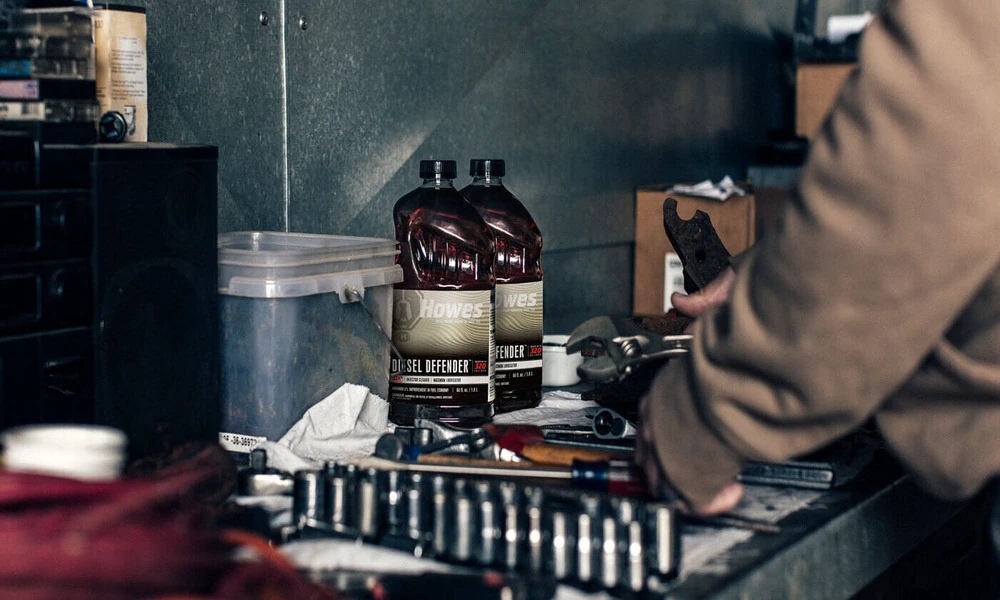
Howes Diesel Defender is the product I point to here. It uses an IDX4 detergent made to clean existing deposits and stop new ones, including internal injector deposits. Howes reports that independent lab tests on the HFRR wear scar test showed fuel treated with Defender beating both the US standard of 520 microns and the stricter European standard of 460 microns. The company also says it reduces smoke, improves throttle response, and raises cetane for more complete burning. They guarantee a fuel economy gain of 5 percent or more with regular use.
Defender works year round, and you can use it with Diesel Treat. Howes designs all of their products to work together.
Water in Farm Fuel
Water gets into farm tanks through condensation, rain, and long storage. It causes rust, filter problems, and growth of microbes in the tank.
Pay attention to how a treatment handles water. Some products mix water into the fuel so it passes through the engine. Howes takes a different approach. Their petroleum-based formulas separate water from the fuel and push it out so a water separator can remove it. They note that major diesel engine makers prefer this method. Drain your separators on a regular schedule, and the treatment does the rest.
Used Equipment and Missed Maintenance
If you bought a used tractor, or you skipped treatment for a few seasons, a daily additive may not be enough. Baked-on deposits need a stronger first step.
Howes Meaner Power Kleaner is a one-tank deep clean for that situation. It uses KleanBurn Technology to cut deposits on injectors, restore spray patterns, and recover lost power. It also reduces soot, which lowers the load on the diesel particulate filter. It works in all diesel engines and emission systems, and it is safe with biodiesel and renewable diesel. Use it once, then switch to a regular routine with Diesel Defender and Diesel Treat.
Bulk Tanks on the Farm
If you store fuel in drums, totes, or an inground tank, buying small bottles wastes time. Howes offers concentrates for bulk storage. Diesel Treat Concentrate treats at ratios as strong as 1 gallon per 3,000 gallons above 0°F. Diesel Defender Concentrate gives the same cleaning and lubricity in drums and totes, and one tote treats up to 825,000 gallons.
Why I Recommend Howes Products
Howes Products is a fifth-generation, family-owned company in North Kingstown, Rhode Island. They have made additives and lubricants since 1920. Here is why I think they fit farm owners well:
- Their formulas contain no alcohol or harmful solvents.
- They test every product in the lab and in the field before release.
- Diesel Treat is warranty safe, friendly to particulate filters, and works in all diesel and biodiesel blends, including home heating oil.
- The line covers gel prevention, rescue, lubricity, cleaning, and bulk needs, and the products work together.
- Every product has a 100 percent satisfaction guarantee with a refund when you mail in your receipt.
- They publish free guides on topics such as cloud points and diesel algae through their Knowledge Station and blog.
A Simple Routine to Follow
1. Add Diesel Treat at every fill-up in cold months, using the double dose for tractors.
2. Add Diesel Defender through the rest of the year to protect injectors and pumps.
3. Run Meaner Power Kleaner once through any machine with an unknown history.
4. Keep a bottle of Diesel Lifeline in each tractor cab or toolbox.
5. Drain water separators on a set schedule.
6. Use concentrates for drums, totes, and inground tanks.
Pick the step that fits your biggest problem first, then add the rest as your needs grow. A steady routine costs less than a single breakdown during planting or harvest.
