

Car tyre repair is one of those automotive necessities that few drivers consider until they are already dealing with a flat, a slow leak, or a warning light on the dashboard. When the moment comes, the questions arrive quickly: can this be patched, does the whole tyre need to go, and who can be trusted to make that call correctly? The answers depend on the nature and location of the damage, the condition of the tyre, and whether the person assessing it is following proper industry standards or offering a quick fix that will not hold.
What Can and Cannot Be Repaired
Not all tyre damage is repairable. The industry follows widely accepted guidelines that define the conditions under which a safe and lasting repair is possible.
Punctures in the central tread area, up to approximately six millimetres in diameter, can generally be repaired using a plug-and-patch method. This covers the majority of nail and screw punctures that drivers encounter. Damage to the sidewall is a different matter entirely. The sidewall flexes with every revolution of the wheel, and any repair applied there faces continuous mechanical stress that will not hold reliably under sustained load.
Other conditions that rule out repair include:
- Damage caused by driving on a flat tyre, which can destroy the internal structure even when the outside looks intact
- Tread depth already below the legal minimum of 1.6mm
- Multiple punctures close together, or a second puncture in a previously repaired area
- Visible cracking, bulging, or blistering anywhere on the sidewall or shoulder
The Correct Repair Process
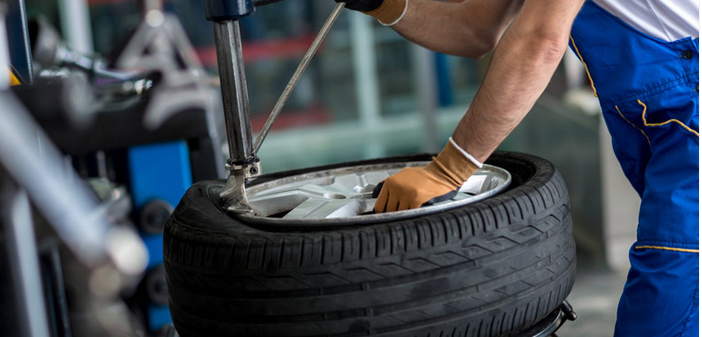
A proper car tyre repair begins with removing the tyre from the rim entirely. Any workshop that attempts to repair a tyre while it remains mounted is not meeting the minimum standard for safe practice. Once dismounted, the technician inspects the inner liner for evidence of heat damage, belt separation, or structural compromise that is invisible from the outside.
If the tyre passes inspection, the repair process involves cleaning the injury channel from the inside, buffing the liner surface around the damage, applying vulcanising cement, and fitting a combination plug-patch unit. This two-part repair seals both the hole in the carcass and the liner simultaneously, preventing air loss and protecting the repair site from moisture intrusion.
The tyre is then remounted, inflated to the correct specification, and balanced before returning to the vehicle. This takes time and proper equipment. A rushed or incomplete repair – particularly one that skips the dismount and inspection step – offers no meaningful guarantee of durability or safety.
Mobile Tyre Repair: A Practical Option
For drivers who cannot move their vehicle, mobile tyre repair services have become an increasingly practical solution in Singapore. A qualified technician travels to the vehicle’s location – whether a carpark, roadside, or residential driveway – with the tools and materials needed to carry out a proper repair or replacement on the spot.
These services are particularly useful for:
- Drivers stranded in inconvenient locations without a spare tyre
- Vehicles with no spare tyre provision or run-flat capability
- Fleet managers maintaining vehicles across multiple sites
- Drivers who prefer not to wait at a workshop for a straightforward repair
A reputable mobile service carries the same equipment found in a fixed workshop, including dismounting tools and a portable balancer. The quality of the repair should not differ from what a workshop provides – if it does, that is a reason to choose a different provider.
What Does Tyre Repair Cost?
In Singapore, a standard puncture repair typically involves a modest charge for a basic plug, or a higher fee for a full plug-patch repair carried out by a reputable workshop. Mobile call-out services carry a premium to cover travel time and equipment. Exact pricing varies by provider and location, but the difference between a cheap patch and a proper repair is rarely significant in cost – and enormous in outcome.
As the late founding Prime Minister Lee Kuan Yew once reflected, “I have always believed that doing something properly the first time is the most efficient course of action.” That philosophy applies in workshops as much as in governance. A workshop with trained technicians and honest assessments is worth paying a little more for, because the cost of a repair that fails is always higher.
When to Replace Rather Than Repair
There are situations where tyre puncture repair is simply not the right course of action. These include tyres with tread below the legal minimum, any sidewall damage, evidence of internal structural compromise, and any tyre that has been run flat for even a short distance. In these cases, the only responsible decision is replacement.
A compromised tyre that should have been replaced creates serious risk at speed. Handling degrades, stopping distances increase, and the chance of a sudden blowout rises sharply – particularly on expressways and in wet conditions.
Conclusion
Understanding the difference between a repairable puncture and a tyre that should be replaced makes a practical difference when it matters most. The correct approach – dismounting, inspecting, and applying a proper plug-patch – is not complicated, but it requires the right equipment, adequate training, and a commitment to doing the job well. Whether dealing with a roadside emergency or a slow puncture discovered overnight, skilled and thorough car tyre repair is the safest and most reliable route back on the road.
